Royal Alcázar of Seville: From Almohad Fortress to Residence of Kings
The Royal Alcázar of Seville is a palace complex that was added to the UNESCO World Heritage List in 1987 together with Seville Cathedral and the Archive of the Indies. The palace shows how, over several centuries, one place went from being a fortified enclosure to a showcase of its rulers' power. What exactly is this complex, and what is worth seeing within its walls? Here you will find the main facts for planning your visit.
What the Royal Alcázar Is
The Alcázar is a palace complex whose oldest enclosure dates to the period between the middle and the end of the eleventh century. In the twelfth century the Almohads rebuilt the whole complex and gave it the character of a fortress.
Today it holds palaces, courtyards and gardens. Each era left its mark, so you can walk through this Seville monument like someone reading a book whose chapters were written by different rulers. The Alcázar is also not a museum frozen in the past. It is the residence of the royal family during their visits to Seville, which, according to encyclopedia entries, makes it the oldest royal palace still in use in Europe.
The Palace of Pedro I, Heart of the Complex
The heart of the complex is the Mudejar palace of King Pedro I. Construction began in 1356, and the palace inscriptions give 1364 as the year it was finished. These make it possible to date it fairly precisely and to tell it apart from the earlier Almohad structures.
Patio de las Doncellas, Patio de las Muñecas and the Hall of Ambassadors
The Patio de las Doncellas is a rectangular courtyard of about 21 by 15 meters, surrounded by four galleries. Its upper floor was remodeled between 1540 and 1572, so in a single space you can see the marks of at least two different eras. It is worth pausing to compare the lower part of the courtyard with the upper one.
The Patio de las Muñecas was remodeled between 1847 and 1855. The origin of its name is still uncertain: Rodrigo Caro was already speculating about it in 1637.
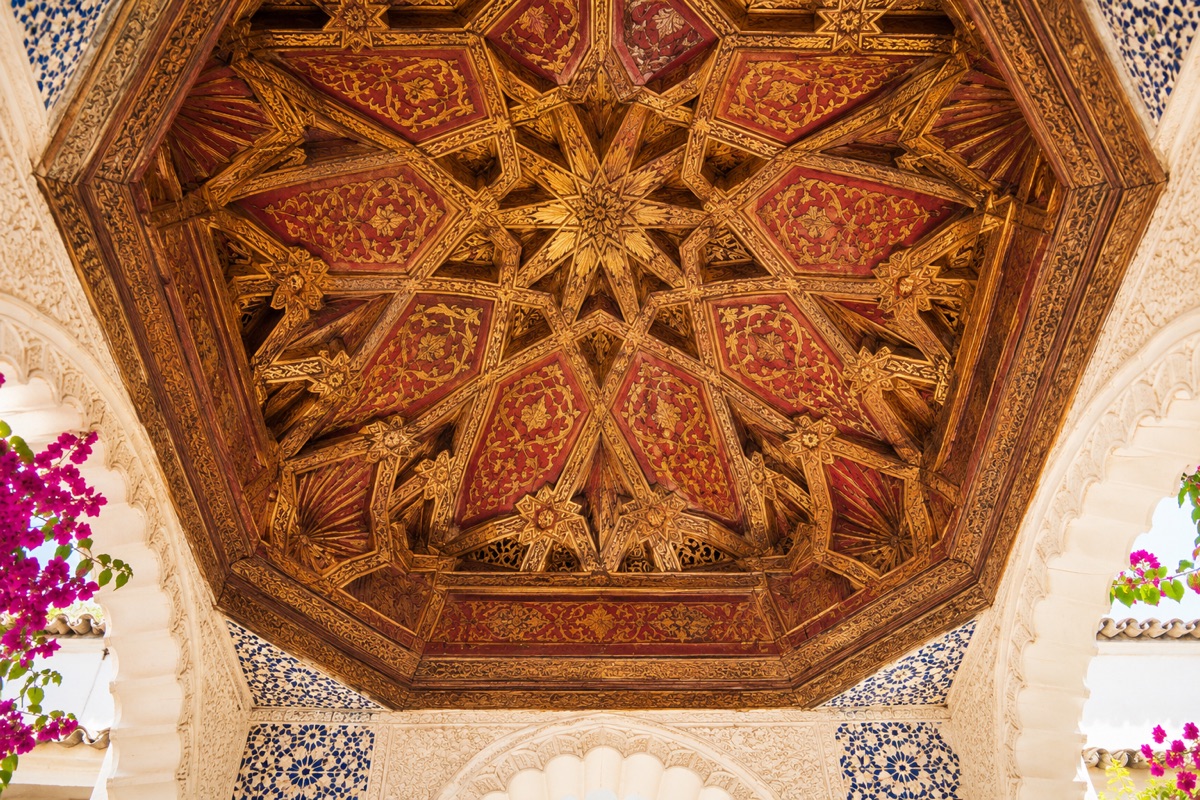
The Hall of Ambassadors is considered the most sumptuous room in the palace. Diego Ruiz made its dome in 1427, more than sixty years after work on the palace ended in 1364. Expansion and decoration therefore continued long after its construction.
The Alcázar Gardens: The Green Side of the Complex
The Alcázar gardens count among the oldest in the city. They were transformed in the sixteenth century and the early seventeenth, so their present layout is the result of several generations of work. One place worth stopping is the Mercury Pond. The bronze statue of Mercury beside it dates from 1576.
After walking through the halls, you can continue your visit with a stroll in the gardens. There you can rest after the ornate salons and see how the complex gradually took on a residential character across the different eras.
What to Pay Attention to During Your Visit
The Royal Alcázar was not built all at once. As you walk through it, notice the differences between its stages: the oldest walls from the eleventh century, the Almohad reconstruction of the twelfth century, the palace built from 1356 to 1364 and later changes, such as the remodeling of the upper floor of the Patio de las Doncellas between 1540 and 1572. That way you can recognize the marks of several periods and styles in this monument.
Pay attention to the dates as well, since they help place each space in its time. Diego Ruiz's dome of 1427, the Mercury statue of 1576 and the remodeling of the Patio de las Muñecas from 1847 to 1855 show how long the complex kept being extended and decorated.
Why Get to Know the Royal Alcázar
At the Alcázar you can see eleventh-century walls and Mudejar interiors within one enclosure. Its addition to the UNESCO World Heritage List in 1987, along with Seville Cathedral and the Archive of the Indies, confirms the importance of this heritage. It also remains the residence of the royal family during their visits to Seville, so its story continues in the present.
The Royal Alcázar brings together eleventh-century walls, structures from the Almohad reconstruction, the Mudejar palace of Pedro I and gardens transformed since the sixteenth century. If you visit Seville, make it one of the main stops on your itinerary and set aside time to explore its courtyards, halls and gardens at a relaxed pace. We invite you to keep reading our upcoming articles on the heritage of Andalusia.