Palacio de las Dueñas in Seville: History and Architecture
Palacio de las Dueñas is a Seville residence that combines Gothic-Mudejar, Renaissance and Plateresque styles. Over the centuries it has changed owners and uses, and today you can visit it. Where does its name come from, and why does this building matter so much to the city's history? In this article we trace how the palace was transformed, who lived in it and what you can see in its Andalusian courtyard and gardens.
What Palacio de las Dueñas Is
The residence stands in Seville and was declared a site of cultural interest on June 3, 1931. That category officially recognizes the building as part of the cultural heritage. Its name comes from the former monastery of Santa María de las Dueñas, located nearby. The palace was built in the fifteenth century and remodeled between the late fifteenth and early sixteenth centuries.
That was when it took on its Gothic-Mudejar character. Later it was expanded in the Renaissance style, with Plateresque elements. For this reason, this guide presents it as a witness to several eras rather than the work of one architect or a single century.
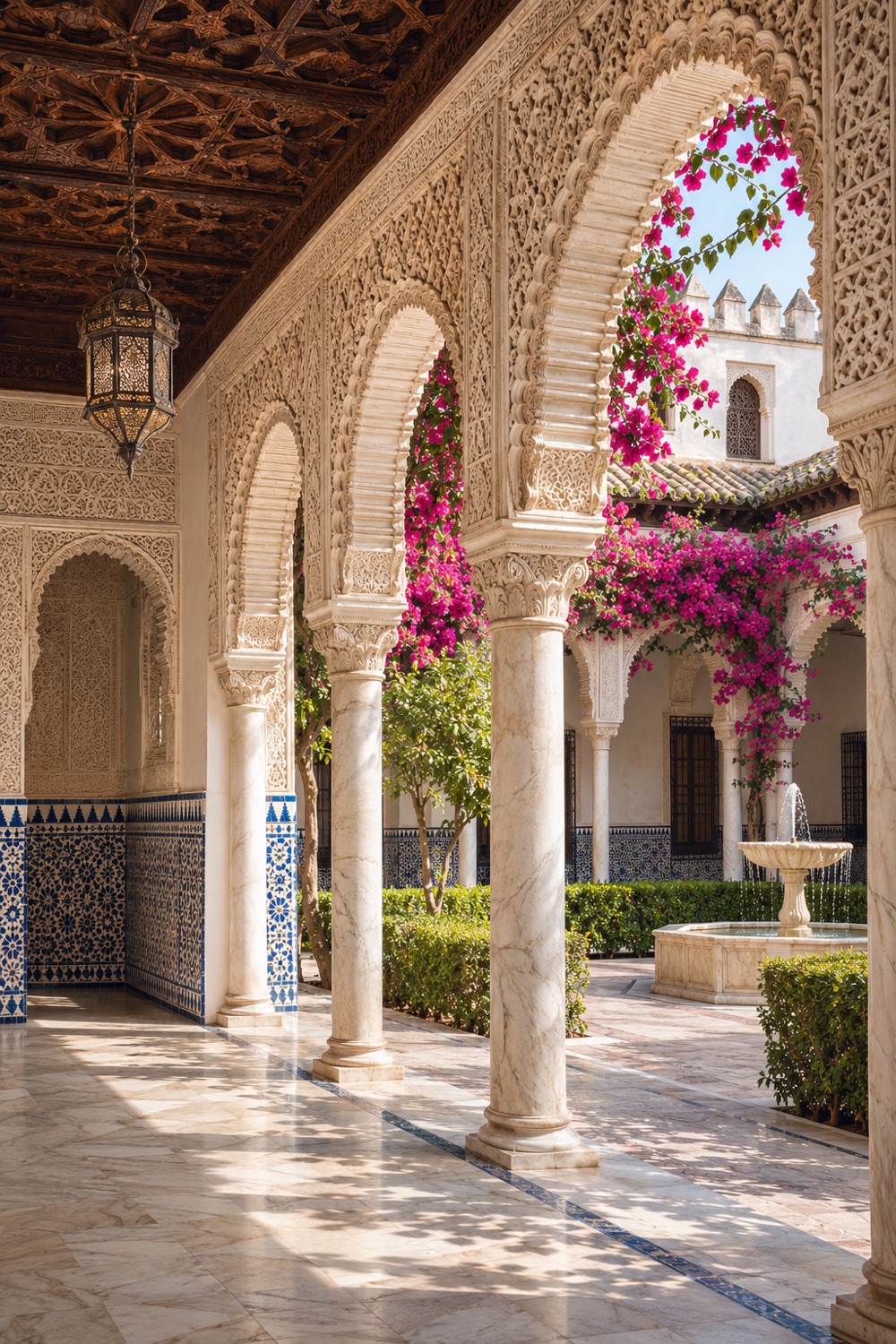
Catalina de Ribera and the Remodeling of the Palace
The land originally belonged to the Pineda family. According to the records, Pedro de Pineda sold the houses to Catalina de Ribera in 1496. She undertook a deep remodeling, which is why her name is linked to the look the palace took on in its first period of splendor.
The work carried out between the late fifteenth and early sixteenth centuries gave the building the Gothic-Mudejar character that remains one of its main traits. Later additions brought in Renaissance and Plateresque elements, so several styles overlap in the Seville palace. Keep that in mind as you walk through the interiors, since each element may belong to a different stage of its history.
From the Riberas to the House of Alba
The next milestone in the palace's history was a wedding. Palacio de las Dueñas passed to the House of Alba after the marriage celebrated on February 9, 1612. Antonia Enríquez de Ribera then married Fernando Álvarez de Toledo y Mendoza, the fourth Duke of Alba de Tormes. Since then the residence has been tied to the House of Alba.
In the nineteenth century the fate of the building changed. The palace became a tenement house, its rooms were divided and the coffered ceilings were covered over. This period shows that even a stately residence could change its use completely. During those years, on July 26, 1875, the poet Antonio Machado was born here. His birth links the palace with literature as well as with the aristocracy.
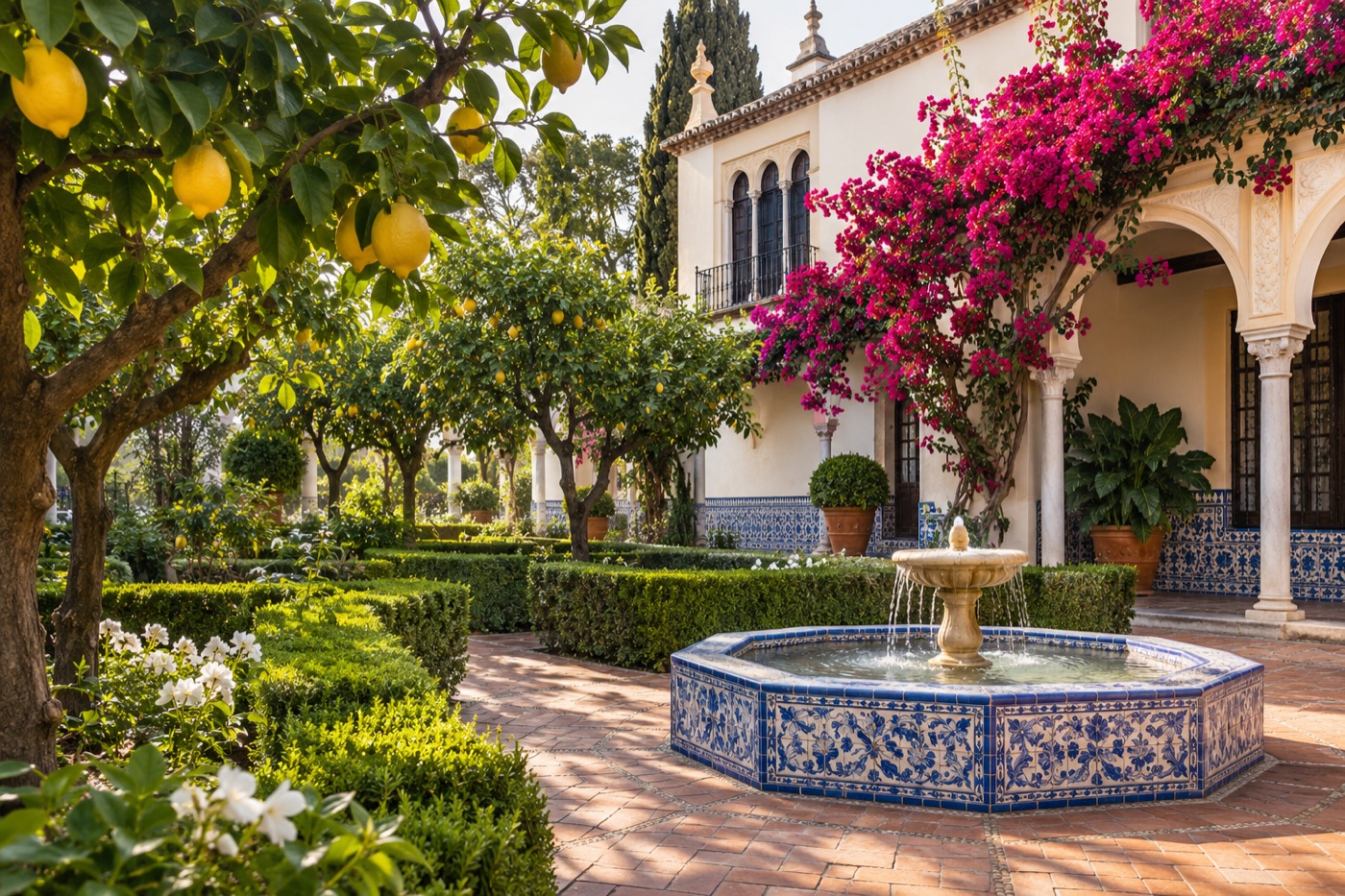
The Andalusian Courtyard and the Palace Gardens
The open spaces are among its greatest attractions. The palace has a main courtyard in the Andalusian style, the Patio del Aceite and four gardens, including the Garden of the Lemon Trees. The building is arranged around the Andalusian courtyard, with the Patio del Aceite as a further interior space.
Jacobo Fitz-James Stuart designed the current layout of the gardens between 1910 and 1920. The gardens you see today therefore come from an intervention in the early twentieth century, later than the oldest parts of the palace. The residence thus combines historic interiors from the fifteenth and sixteenth centuries with landscape design from another era. The Garden of the Lemon Trees is one of the four gardens worth walking through during your visit.
Interiors, Chapel and Collections
The collections enrich the palace interiors, which hold paintings, sculpture and decorative arts from the sixteenth to the twentieth centuries. The visit therefore lets you travel through several centuries of art and see how these pieces complement the architecture.
The chapel deserves special mention. It holds an altarpiece by Neri di Bicci from the late fifteenth century, which matches the early stages of the building's history. During your visit, notice how it fits into the Gothic-Mudejar whole.
Why Get to Know Palacio de las Dueñas
The palace combines Gothic-Mudejar, Renaissance and Plateresque styles, and it is tied to figures such as Catalina de Ribera and Antonio Machado. Cayetana Fitz-James Stuart, Duchess of Alba, lived here and died in the palace in 2014. It has been open to the public since 2016, so you can see its interiors and gardens.
Its history also reflects the changing uses of the building: the private remodeling of the late fifteenth century, its time as a residence of the House of Alba, its conversion into a tenement house in the nineteenth century and, in the twentieth, its role as the home of a duchess and the creation of the gardens designed by Jacobo Fitz-James Stuart.
If you want to get to know Seville through its architecture, Palacio de las Dueñas lets you discover how the building, its owners and its uses have changed over the centuries. We invite you to keep reading about Seville's heritage. Before planning your visit, check the current conditions with the official sources.